January 1
January 1 is the first day of the year in the Gregorian calendar; 365 days remain (366 in leap years). It marks the start of the modern civic new year and falls in the heart of Northern-Hemisphere winter.
External references
Curated jump-off points to the major almanacs, encyclopaedias and primary sources for this date.
Astronomy
- Earth approaches its annual perihelion (closest point to the Sun, ≈147.1 million km), which occurs around January 3–4.
- Quadrantids meteor shower active (peaks January 3–4).
Position in the year
Holidays & observances
- New Year's Day (worldwide)
- Public Domain Day (works whose copyright has expired enter the public domain)
- Global Family Day (UN)
- Independence Day — Haiti (1804), Sudan (1956), Cameroon (1960), Brunei (1984)
- Solemnity of Mary, Mother of God (Roman Catholic)
Events
A selection of widely-documented historical events that took place on this date. Years marked BCE follow standard astronomical convention.
 45 BCE — The Julian calendar took effect, the result of reforms ordered by Julius Caesar. ↗(2071 years ago)
more
The Julian calendar is a solar calendar of 365 days in every year with an additional leap day every fourth year. The Julian calendar is still used as a religious calendar in parts of the Eastern Orthodox Church and in parts of Oriental Orthodoxy as well as in the Berber calendar.
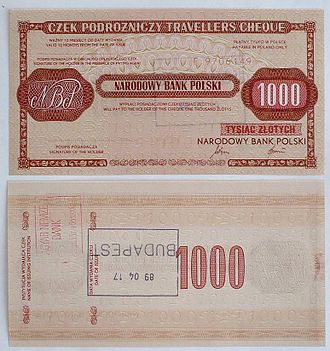 1772 — The first traveller's cheques were issued by the London Credit Exchange Company. ↗(254 years ago)
more
A traveller's cheque is a medium of exchange that can be used in place of the currency of a country. Each cheque is denominated in a preprinted fixed, round, amount of one of a number of major world currencies; it has two panels for a signature.
 1788 — The first edition of The Times of London was published (renamed from The Daily Universal Register). ↗(238 years ago)
more
The Times is a British daily national newspaper based in London. It began in 1785 under the title The Daily Universal Register, adopting its modern name on 1 January 1788. The Times and its sister paper, The Sunday Times, are published by Times Media, since 1981 a subsidiary of News UK, in turn wholly owned by News Corp.
 1801 — The Act of Union joined Great Britain and Ireland to form the United Kingdom. ↗(225 years ago)
more
The Acts of Union 1800 were parallel acts of the Parliament of Great Britain and the Parliament of Ireland which united the Kingdom of Great Britain and the Kingdom of Ireland to create the United Kingdom of Great Britain and Ireland.
 1801 — Italian astronomer Giuseppe Piazzi discovered Ceres, the first known asteroid (and now-classified dwarf planet). ↗(225 years ago)
more
Ceres is a dwarf planet in the main asteroid belt between the orbits of Mars and Jupiter. It was the first known asteroid, discovered on 1 January 1801 by Giuseppe Piazzi at Palermo Astronomical Observatory in Sicily, and announced as a new planet.
 1863 — U.S. President Abraham Lincoln's Emancipation Proclamation took effect, declaring slaves in Confederate-held territory legally free. ↗(163 years ago)
more
The Emancipation Proclamation, officially Proclamation 95, was a presidential proclamation and executive order issued by United States president Abraham Lincoln on January 1, 1863, during the American Civil War.
 1892 — Ellis Island opened as a U.S. immigrant inspection station; some 12 million immigrants would pass through over the next six decades. ↗(134 years ago)
more
Ellis Island is an island in New York Harbor, within the U.S. states of New Jersey and New York. Owned by the U.S. government, Ellis Island was once the busiest immigrant inspection and processing station in the United States.
 1901 — The Commonwealth of Australia was federated from six self-governing colonies. ↗(125 years ago)
more
The Federation of Australia was the process by which the six separate British self-governing Australian colonies — New South Wales, Queensland, South Australia, Tasmania, Victoria, and Western Australia — united to form the Commonwealth of Australia, establishing a system of federalism in Australia.
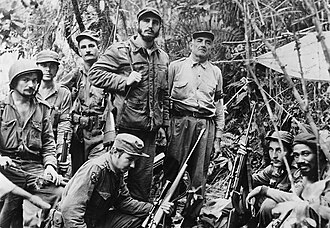 1959 — Cuban dictator Fulgencio Batista fled the country; Fidel Castro's revolutionary forces took power. ↗(67 years ago)
more
The Cuban Revolution was the military and political movement that overthrew the dictatorship of Fulgencio Batista, who had ruled Cuba from 1952 to 1959. The revolution began after the 1952 Cuban coup d'état, in which Batista overthrew the emerging Cuban democracy and consolidated power.
- 1983 — ARPANET officially adopted the TCP/IP protocol suite — often called "the birthday of the modern Internet". ↗(43 years ago)
more
A flag day in computing and system administration is a planned change that requires many systems to be upgraded or converted in a coordinated way because the old and new versions are not mutually compatible. Such changes are typically costly to carry out and, if problems arise, difficult to roll back.
 1993 — Czechoslovakia peacefully dissolved into the Czech Republic and Slovakia (the "Velvet Divorce"). ↗(33 years ago)
more
The dissolution of Czechoslovakia, which took effect on 31 December 1992, was the self-determined partition of the Czech and Slovak Federative Republic into the independent countries of the Czech Republic and Slovakia.
 1999 — The euro was introduced as an electronic currency in 11 European Union member states. ↗(27 years ago)
more
The euro is the official currency of 21 of the 27 member states of the European Union. This group of states is officially known as the euro area, more commonly named the eurozone. The euro is divided into 100 euro cents.
 2002 — Euro coins and banknotes entered circulation, replacing 12 national currencies overnight. ↗(24 years ago)
more
Banknotes of the euro, the common currency of the eurozone, have been in circulation since the first series was issued in 2002. They are issued by the national central banks of the Eurosystem or the European Central Bank. The euro was established in 1999, but "for the first three years it was an invisible currency, used for accounting purposes only, e.g.
Notable births
 1735 — Paul Revere, American silversmith and Patriot remembered for his 1775 'midnight ride'. ↗(291 years ago)
more
Paul Revere was an American silversmith, military officer and industrialist who played a major role during the opening months of the American Revolutionary War in Massachusetts, engaging in a midnight ride in 1775 to alert nearby minutemen of the approach of British troops prior to the battles of Lexington and Concord.
 1879 — E. M. Forster, English novelist (A Passage to India, Howards End). ↗(147 years ago)
more
Edward Morgan Forster was an English author. He is best known for his novels, particularly A Room with a View (1908), Howards End (1910) and A Passage to India (1924). He also wrote numerous short stories, essays, speeches and broadcasts, as well as biographies and pageant plays.
 1895 — J. Edgar Hoover, first director of the U.S. Federal Bureau of Investigation. ↗(131 years ago)
more
John Edgar Hoover was an American law enforcement administrator who served as the fifth and final director of the Bureau of Investigation (BOI) and the first director of the Federal Bureau of Investigation (FBI). President Calvin Coolidge first appointed Hoover as director of the BOI, the predecessor to the FBI, in 1924.
 1919 — J. D. Salinger, American novelist (The Catcher in the Rye). ↗(107 years ago)
more
Jerome David Salinger was an American author best known for his 1951 novel The Catcher in the Rye. Salinger published several short stories in Story magazine in 1940, before serving in World War II. In 1948, his critically acclaimed story "A Perfect Day for Bananafish" appeared in The New Yorker, which published much of his later work.
 1942 — Country Joe McDonald, American singer-songwriter and Vietnam-era protest figure. ↗(84 years ago)
more
Joseph Allen "Country Joe" McDonald was an American singer, songwriter, musician and film composer, who was the lead singer and co-founder of the 1960s psychedelic folk-rock group Country Joe and the Fish.
Notable deaths
 1953 — Hank Williams, American country-music singer and songwriter, aged 29. ↗(73 years ago)
more
Hiram "Hank" Williams was an American singer, songwriter, and musician. An early pioneer of country music, he is regarded as one of the most significant and influential musicians of the 20th century. Williams recorded 55 singles that reached the top 10 of the Billboard Country & Western Best Sellers chart, 5 of which were released posthumously, and 12 of ...
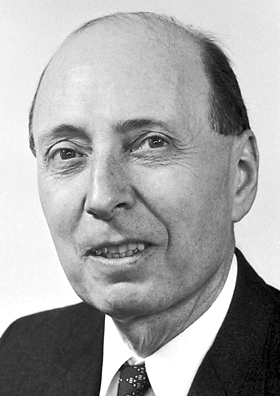 1995 — Eugene Wigner, Hungarian-American physicist and Nobel laureate. ↗(31 years ago)
more
Eugene Paul Wigner was a Hungarian-American theoretical physicist who also contributed to mathematical physics. He received the Nobel Prize in Physics in 1963 "for his contributions to the theory of the atomic nucleus and the elementary particles, particularly through the discovery and application of fundamental symmetry principles".
Numerical & calendrical curiosities
| Day-of-year (1) | 1 · composite (no) |
|---|---|
| Days remaining (365) | 5 × 73 |
| Date code DDMMYYYY | 01012026 · no palindrome in next 200 years |
| Sun declination | -23.00° (Cooper approximation) |
| Distance from solstice | 12 days |